Pinky and the Brain Were Posting Before Posting Was a Thing: The Show's Eerily Accurate Vision of 2024
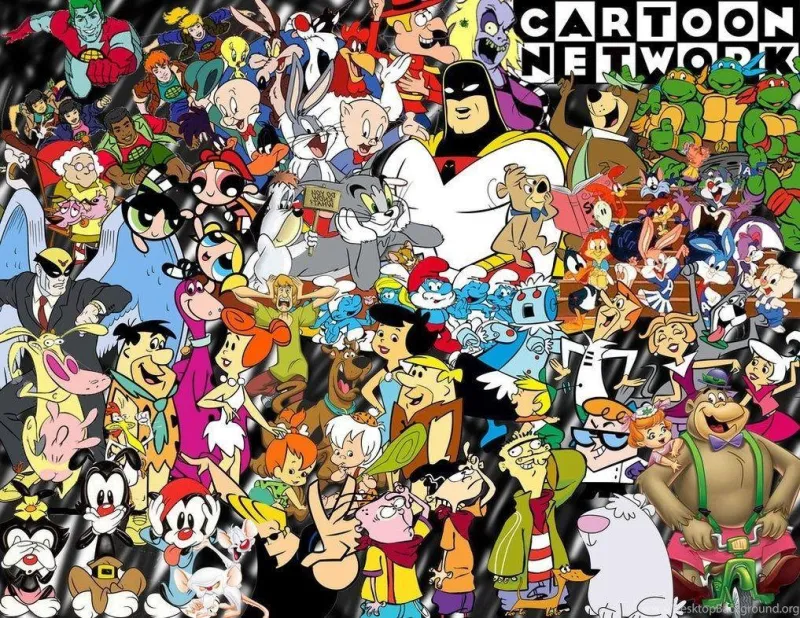
Photo: retro 90s television cartoon nostalgia meme culture internet, via wallpaperaccess.com
Somewhere between the first iPhone and the algorithmic collapse of your attention span, Pinky and the Brain quietly became prophetic.
That's not a sentence anyone expected to write in 2024. The show ran from 1995 to 1998. It was, ostensibly, a cartoon for children about laboratory mice. And yet, scroll through any meme page, doomscroll through late-night Twitter (fine, X, whatever), or sit through five minutes of a tech CEO's conference keynote, and you'll feel the ghost of Brain's latest scheme hovering somewhere nearby. The show's satirical DNA has aged so well it's almost suspicious.
So what did Pinky and the Brain get right? Buckle up, because the answer is: kind of a lot.
The Villain Who Just Wanted to Optimize Everything
Let's start with Brain himself. Strip away the mouse ears and the oversized cranium, and what do you have? A highly intelligent, deeply antisocial individual who is absolutely convinced that the world would function better if he were simply allowed to run it. He doesn't want chaos. He wants efficiency. He wants systems. He wants, in the parlance of 2024, to disrupt.
Sound familiar? Because it should. The tech industry has spent the better part of two decades producing real-life Brains at an alarming rate — brilliant, humorless, and utterly baffled that the rest of humanity doesn't immediately recognize the superiority of their vision. Brain's schemes, for all their absurdity, follow a very recognizable logic: identify a lever, pull it hard enough, and the world bends to your will. That the lever is usually something like "hypnotic cheese'' or "a giant magnet shaped like Abraham Lincoln'' is almost beside the point.
The show was satirizing a certain kind of ambition — the kind that's so convinced of its own rightness that it becomes genuinely unaware of its own ridiculousness. That particular flavor of hubris has only become more culturally dominant since 1995.
Absurdism as the Default Setting
Here's the thing Gen Z understood immediately when they started discovering the show on streaming: Pinky and the Brain operates in a register that feels native to internet humor.
The plots don't follow conventional logic. The jokes frequently subvert their own setups. Characters commit to completely nonsensical premises with total sincerity. Cause and effect are suggestions at best. If you described the show's comedic sensibility to someone who'd never seen it, you might accidentally describe half of what's currently trending on TikTok.
Consider the episode "Napoleon Brainoparte," in which Brain travels back in time to become Napoleon and conquer Europe — only for Pinky's cheerful incompetence to derail everything in ways that are both completely unpredictable and somehow inevitable. The joke isn't really about Napoleon. It's about the gap between grand ambition and chaotic reality, a theme that resonates differently when your daily experience includes watching a billionaire rename a social media platform on a whim and immediately regret it.
Absurdism works best when reality is already pretty strange. Pinky and the Brain was ahead of the curve on just how strange reality was going to get.
The Meme Machine That Didn't Know It Was a Meme Machine
Let's talk about the catchphrases, because they're genuinely remarkable as cultural artifacts.
"Are you pondering what I'm pondering?" — followed by Pinky's spectacularly unrelated response — is, structurally, a meme format. It's a setup that promises one kind of payoff and delivers something completely orthogonal instead. The internet didn't invent that comedic structure, but it absolutely industrialized it, and Pinky and the Brain was running that factory in the mid-'90s.
"The same thing we do every night, Pinky" has become shorthand for a specific kind of exhausted, ironic commitment to a futile routine. In 2024, that phrase gets deployed in comment sections discussing everything from election cycles to the sports team that perpetually breaks your heart. The show gave us language for a very modern feeling: the weary, slightly absurd persistence of trying the same thing and expecting different results.
If that's not the most relatable thing you've heard all week, you may want to check your pulse.
Dystopia as Comedy, Comedy as Survival
Perhaps the deepest connection between Pinky and the Brain and contemporary culture is tonal. The show never pretended the world was going to be okay. Brain's schemes fail, repeatedly and completely, and the show treats this not as tragedy but as the natural order of things. The status quo is absurd. Power is distributed nonsensically. The smartest person in the room is frequently the least equipped to deal with actual human beings.
This is not a comforting worldview. But it is a funny one, and more importantly, it's an honest one. Gen Z, raised on economic instability, climate anxiety, and an information environment specifically designed to make them feel helpless, has developed a comedy sensibility that's similarly grounded in laughing at the machine rather than pretending it isn't there.
Pinky and the Brain didn't cause that sensibility. But it anticipated it with uncomfortable accuracy, which is why the show lands so well with audiences who weren't even born when it originally aired.
Same Thing We Do Every Night
The genius of Pinky and the Brain, viewed through the lens of 2024, is that it found the comedy in the loop. Every episode, the same plan. Every episode, the same failure. Every episode, the same question asked and the same impossible scheme launched into the void.
In 1995, that was a funny cartoon premise. Today, it reads like a coping mechanism.
Maybe that's why the show keeps finding new audiences. In a culture that sometimes feels like it's running the same failed experiment on an infinite loop, there's something genuinely comforting about two mice in a lab who keep trying anyway — one because he can't imagine doing anything else, and one because, honestly, what else are you going to do?
Narf, indeed.